

What is Lindy Hop?
Lindy Hop is a joyful and sociable partner dance that emerged in the Black American communities of Harlem, New York, in the 1920s. It evolved from earlier vernacular African American dances such as the Charleston, Breakaway and Cakewalk, rooted in the African (particularly West African) dance and cultural heritage of these communities.
Lindy Hop was born at a time of intellectual and cultural emancipation of African American identity known as the Harlem Renaissance, and evolved alongside Black American music, art, fashion, politics and scholarship.
While Lindy Hop is a partnered dance, the roles of lead and follow are not heteronormative, with ambidancers (people who dance both roles) and same-sex partnerships existing since it’s inception.
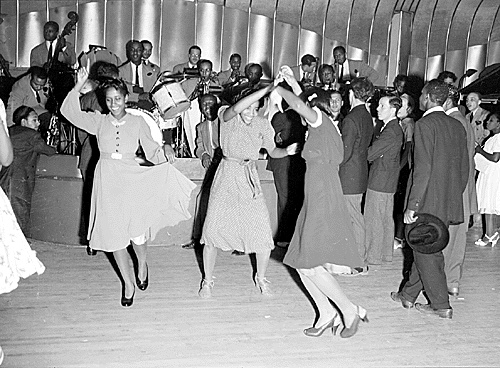
Lindy Hop spread across the world during the Swing Era of the 1930s and 40s and is now a global phenomenon, with thriving swing schools teaching from Stockholm, to Seoul and Maputo (and Oxford, of course!).
Want to know more?
- Bobby White’s blog, Swungover, has articles on the history of the dance and the current dance scene.
- Ken Burn’s Jazz series is recommended for a basic overview of jazz and swing history. Here’s a short clip.
- Check Swing en el Cine for remastered footage of films featuring Lindy Hop.
- The Frankie Manning Foundation has information and videos about Frankie Manning and the other Lindy Hop dancers.
- Kendra Unruh’s important paper May We Have Have This Dance?: Cultural Ownership of the Lindy Hop from the Swing Era to Today describes the evolution and appropriation of the Lindy Hop.